
Optics for professional users
We are New Zealand’s leading supplier of thermal and night vision optics for professional, government and volunteer groups.
Advanced Optics are New Zealand’s premier supplier of professional thermal and night vision optics.
Our products meet the demands of a wide range of professional users. Contact us for expert advice, quotations and demonstration sets. Phone 03 9700 570.
Select user type
Our client base and track record are second to none. As well as providing the finest European made optics, we also offer advise, training, product servicing.
We have demonstration kits for government and SAR/Coastguard that can be taken out and evaluated in real-life conditions.
Contact us to discuss your requirements 03 9700 570
See our professional clients
- Coastguard New Zealand
- Land Search and Rescue New Zealand
- New Zealand Search and Rescue
- Philips Search and Rescue Trust
- NZAF Search and Rescue
- New Zealand Police
- New Zealand Customs
- Department of Conservation
- Ministry for Primary Industries Fisheries
- New Zealand local and regional councils
- Auckland University
- New Zealand wildlife trusts
- New Zealand pest control companies
- Helicopter culling companies
- Meat recovery companies
- New Zealand Fish and Game Council
- Security firms
- Forestry companies
- Farmers, horticulturists and landowners.
Professional news
October 2025 : DOC ranger's Pulsar Journal interview
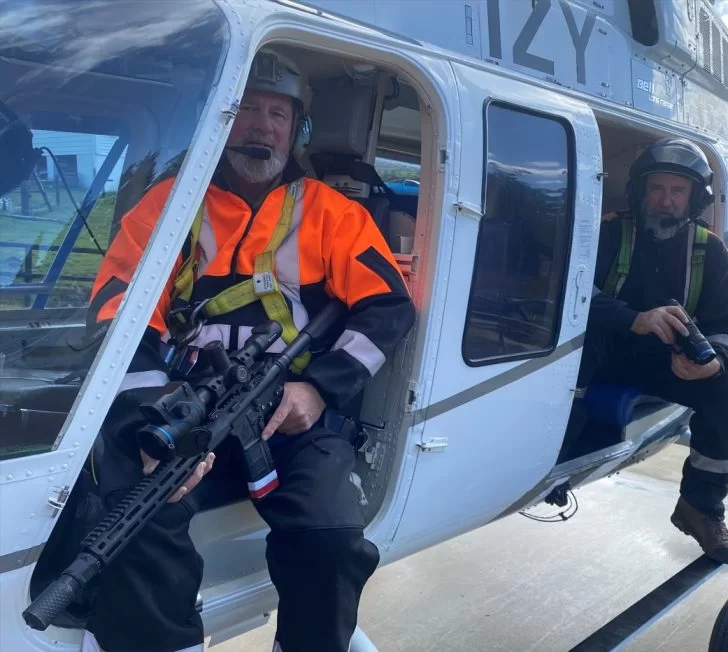
Ian, could you tell me how you got into Thermal Assisted Aerial Control? What was the start for you?
“It all started over 10 years ago. My first time out was with a man named Ant Corke. I can’t remember how we first met, but I recall taking him on an aerial pig control trip to Farewell Spit. Toby Reid, whose family are well-known aviation legends here in New Zealand was our pilot.
At one point, I remember Ant communicating through the intercom, “There’s a smudge over here.” So, we started chasing pigs, and it was a cool experience.
Ant was in the rear of the helicopter spotting pigs with a Pulsar handheld device. We would pursue the pigs through the reeds and low stature bush until a clear shot was able to be taken. We never used the thermal sights back then.
We did numerous TAAC sorties at Farewell Spit and took the method to other areas, such as Abel Tasman National Park and Kahurangi National Park.”
You hunt both on the ground and in the air. How does hunting from a helicopter work?
“As a hunter, I do government and non-government work. As for the government, the full team – the pilot, the shooter, and the thermal camera operator – must go through an assessment and verification process to prove they are capable of this work and follow a certain standard. It’s pretty much like the aircraft, which must follow a specific maintenance schedule. It is quite a hazardous job, as sometimes we fly not only at altitude, but also down in the canopy of the forest, in quite restricted and confined areas where you don’t have much room, with big winds and the risk of stuff getting stuck in the blades. The way you’re held in the helicopter is also important.
We also like to think of the worst-case scenario – for instance, if you crash and hang upside down, stuck with your belt on, you might end up getting burnt to death. For these situations, we have a so-called three-ring system, which allows quick and safe detachment of the harness in case of emergency.”
You mentioned you already started using ballistics – how does that equipment fit into aerial surveys?
“Yes, I started using ballistics in June or July last year, when I was on a delimitation survey of the goat population, which took place in Kahurangi National Park. The primary goal was to shoot goats from the air, a task that requires specific equipment and techniques. It was windy at one point, so I zeroed the rifles and used a Knight’s Armament AR15 223 KS – a nice piece of kit, which is effective for shooting goats even up to 300 meters. It’s low-recoil and easy to use with a thermal sight. DPMS Panther 308, on the other hand, made it harder to maintain a stable sight with a heavy recoil.
The helicopter type is also important, as some are nimbler for close-up work and others, such as the Bell 206 Long Ranger that we used, are better for stable, long-range shooting. You also must maintain a safe distance from the terrain, especially ridges, to avoid wind turbulence and to prevent ricocheting debris from damaging the helicopter’s blades. So, you’ve got to sit back and shoot down rather than straight out. I used specific ballistic tables to make quick, precise shots from as far as 250 meters, spotting goats in the scrub even when the pilot couldn’t. If something goes wrong on the ground, it’s one, but when you’re flying in the air… In New Zealand, these helicopters are like 2500-300 dollars an hour, so if you must fly back, it might cost you a couple of grand.”
What does success look like in the context of pest control?
“There are different levels of success depending on the goal. So basically, there’s eradication, which is the most difficult one, as this is usually sought on islands or in fenced-off areas where it’s possible to eliminate the entire population. Then there is zero density, meaning that while some animals might be present, their population isn’t growing. Lastly, a more manageable level is low numbers, when a small number of pests can be tolerated without significant negative impact. When using ground teams with dogs, success is measured by the number of animals hunted per “man day”, which is defined as 8 hours a day. Both dogs and hunters must meet specific standards. You can’t take any dog; it must be ticked off as a wild animal detection dog.
The hunters must meet a certain standard, a metric called a Seedling Ratio Index, used to measure the health of native flora. Certain palatable plant species are only eaten by pests once they grow to a certain height – about 300 millimeters. So, they measure the number of palatable seedlings below and above this standard and assess the browse damage of the plants. This data shows that if a team can hunt two or fewer animals per man-day, it indicates that plant regeneration is occurring. If the goal is to protect a specific threatened or endangered plant species, the pest control efforts must aim for a zero-density outcome.”
How do you prioritize which areas and species to work on?
“We basically look at the integrated control. You try to pick a fight that you can win. But it changes a bit depending on the time and place. For example, on offshore islands, they try to go for eradication, as they are far enough away from the mainland to stop stoats, which can swim up to a bit less than 2 kilometers. Therefore, if an island is more than 2 kilometers away from the mainland, it is considered a good candidate for an eradication program because it is less likely to be re-invaded by stoats swimming back. Rats will go further, deer – even further, as for goats, they don’t like water at all, so it’s complex.”
How do thermal devices level up your hunting experience?
“The great thing about using thermals is that they remove a lot of risk. We don’t have to do any crazy acrobatics to get to the animals. They’ll often run into the forest and stop because they think we can’t see them anymore. They don’t realize that with the thermal scope, we can still spot them perfectly well, so we can just stop shooting when they’re out of sight and then take a clean shot once they’ve settled down.
Sometimes, if they run into thick scrub, the pilot can get the helicopter down low and blow some cold air on them. They don’t like that, and they’ll start moving, making it easier to see and shoot. It’s a game-changer.”
If you could design the ultimate thermal scope, what would it be?
“Right now, I’m using a Thermion 2 LRF XP50. It’s a few years old but still works great. I have it set with a green circle and a small cross for the reticle – that just works for my eyes. It never let me down, though sometimes I need to do a manual reboot or reset it.
Honestly, the Pulsar scope I’m using is already great. If I could design the ultimate one, I’d only change a couple of things. I’d make it a bit lighter and give it a slightly wider field of view. But other than that, it’s pretty much what I’m using now. I mean, show me something better, right?”
Postscript
Ian has since upgraded to a Pulsar Thermion 2 LRF XL50 providing him with a wider field-of-view.
Pulsar Telos LRF XT50
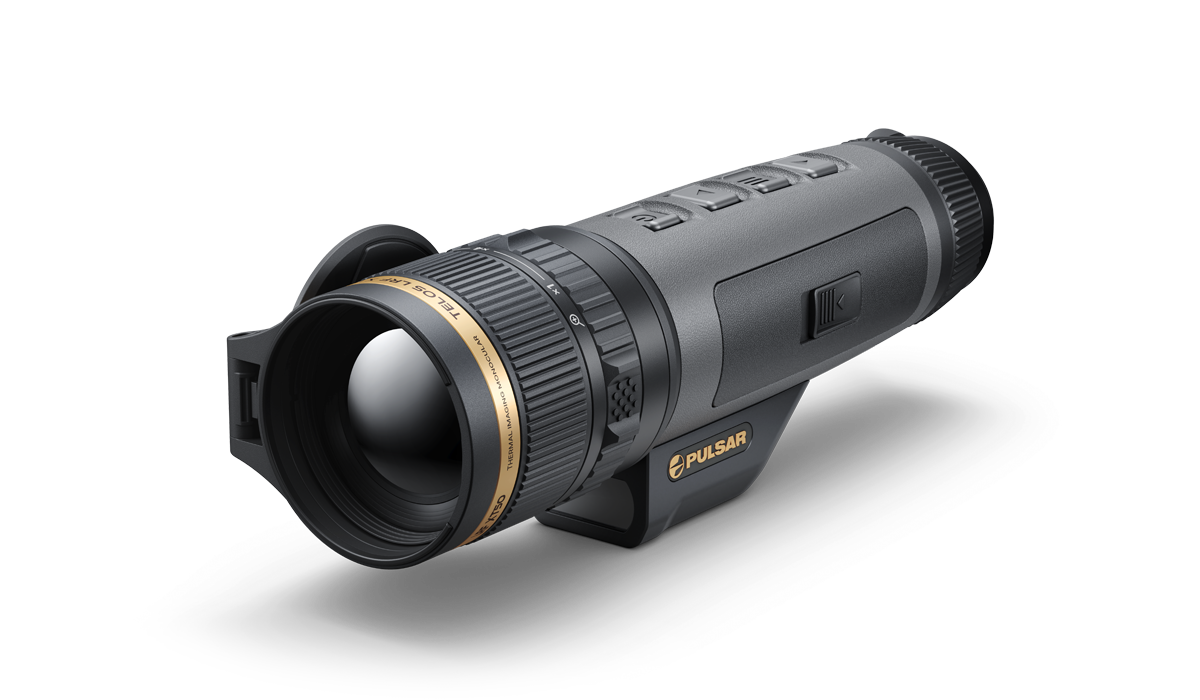
Pulsar’s new flagship Telos LRF XT50 has now entered serial production.
While maintaining all the core features of the Telos range, the new XT50 has the following improvements:
- Lynred ATTO1280 sensor
- 1280×1024 / 12µm sensor resolution
- 1920×1080 AMOLED display
- 1200 metre laser rangefinder
- More compact profile
- Improved manual zoom-ring
- Widest feild-of-view
- Highest zoom capability.
The XT50 surpasses Pulsar’s previous flagship monocular, the XL50, by providing a considerably wider field-of-view, higher zoom capability and user features.
May 2024 : Coastguard Nelson receives new thermal
During the 2022 Coastguard New Zealand National Conference, the Coastguard Nelson unit won an ANV Gen3+ Night Vision Goggle in a prize draw that was sponsored and held by Advanced Optics.
However, after collecting the prize, Coastguard Nelson president Pete Kara generously donated the thermal to Coastguard West Coast who were in more urgent need for this technology.
In recognition of Coastguard Nelson’s generosity, Advanced Optics donated a new Pulsar Lexion XP38 thermal imager to compliment Coastguard Nelson’s existing Pulsar Quantum XQ30V (purchased in 2017) that Wayne had used in a recent successful rescue.

Left to right- Jo Nichols, Christine Stewart-Corke, Wayne Harrison (Coastguard Nelson President), Johanna Cobb.
Pete Kara donating prize to Coastguard West Coast.
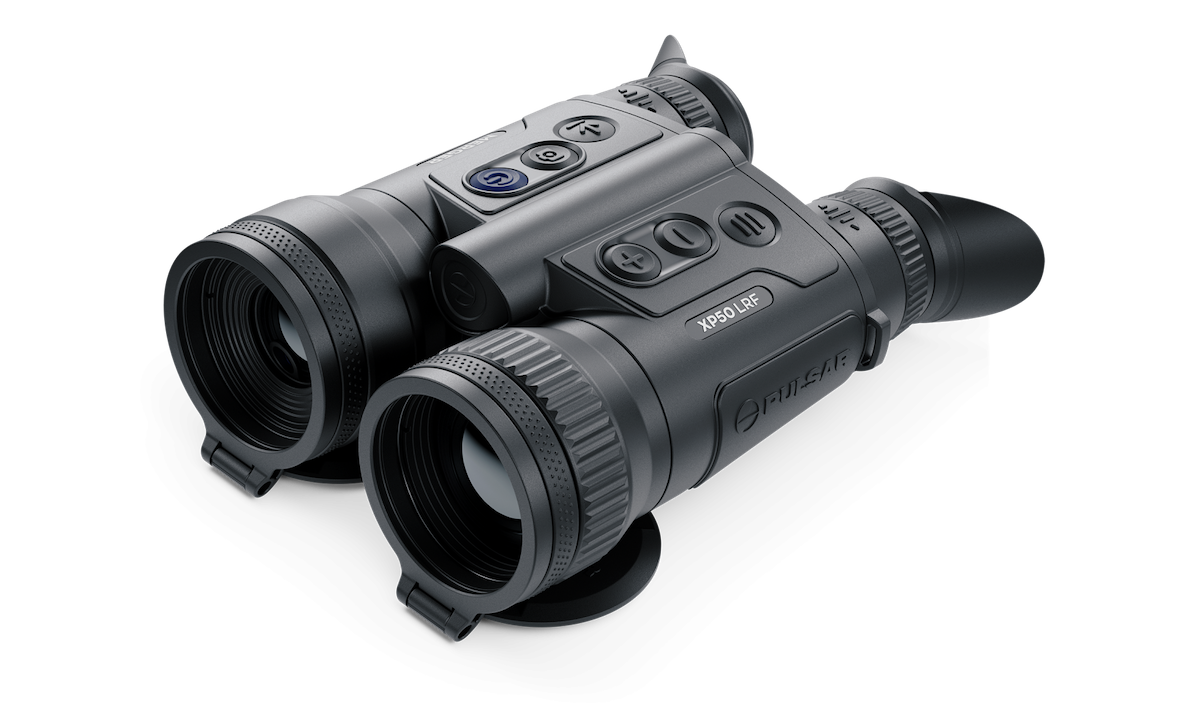
NZ Police invest in Pulsar Merger LRF thermals
New Zealand Police HQ received their latest consignment of Pulsar Merger LRF XP50 bi-ocular thermal imagers. The 33 devices supplied improves officer safety, offender detection, surveillance and first responder search and rescue. Advanced Optics is proud to help Police keep our communities safe.
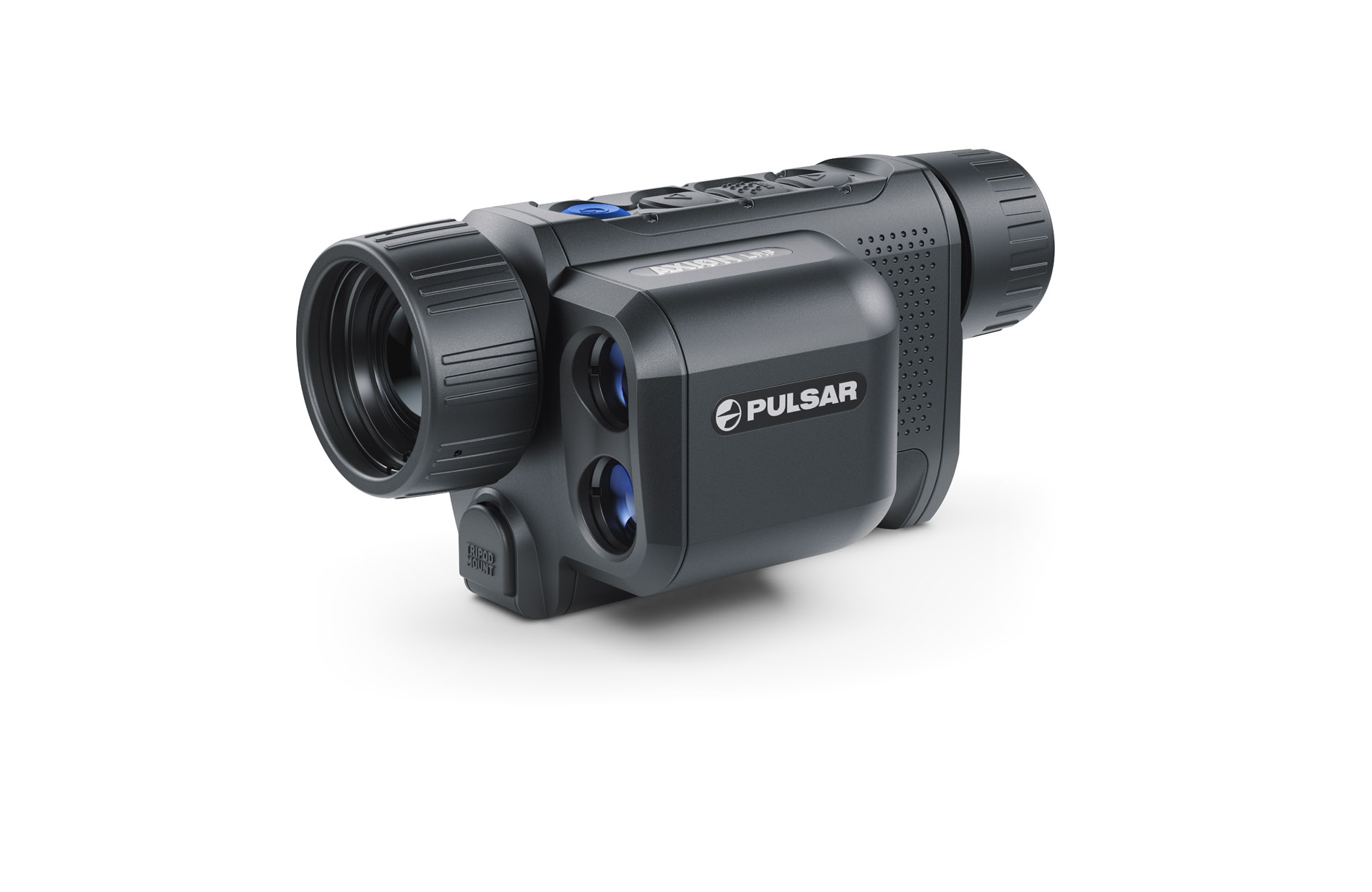
NZ Customs invest in Pulsar Axion 2 LRF thermals
New Zealand Customs recently invested in Pulsar Axion 2 LRF XG35 thermal monoculars. The Axion range are light, compact and offer reliability, performance and ease of use.
Fine image resolution image and time stamped recording enables spotting and recording of suspicious activity. Its compact size is easy to carry and ideal for surveillance and enforcement 24/7.
High Country Contracting makes national news
Our Pulsar thermal optics are used throughout New Zealand by pest control firms, Department of Conservation, regional councils, wildlife trusts, farmers and landowners.
The XP range of riflesights and monoculars are the most sought after, due to having a wide-field-of-view and the ability to zoom-in for longer distances. Our products have quick-change rechargeable batteries that ensure that work is completed during intensive control.
High Country Contracting is a ‘super-star’ pest control firm who use our products for their shooting operations. As well as shooting, they also offer a range of control measures that are proven to maintain low pest numbers.
North Island Wallabies - Pete Peeti
Pete Peeti is a well known author, chef and presenter of Hunting Aotearoa and Kai Time On The Road. Pete also owns Hinaki Pest Control which mainly operates in the Bay of Plenty, Waikato and Central North Island. This video explores his work eradicating Dama wallabies using our thermal and night vision spotters and riflescopes.
ANV Ultra Gen3+ night vision goggles. In stock.
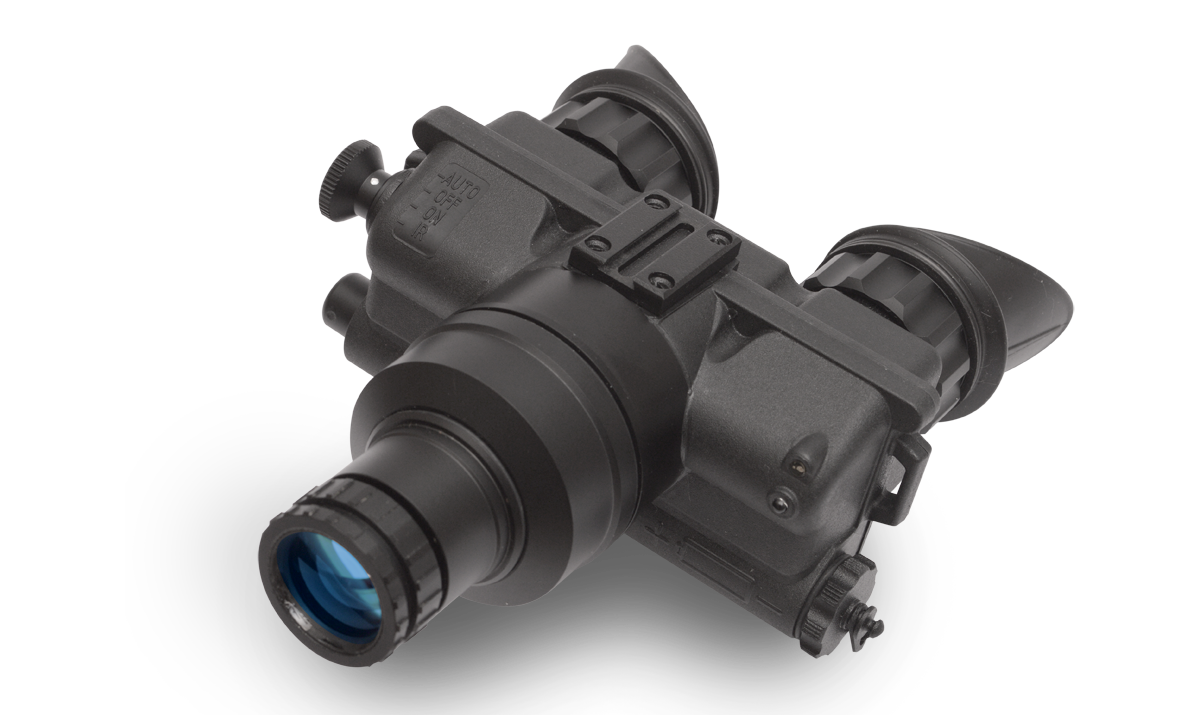
Exceptional generation 3+ night vision performance
Our new range of mil spec Generation 3+ NV goggles, monoculars and accessories are ideal for navigation, search and rescue and security.
The ANV Ultra series are highly specified with important features such as high performance P-45 GaAs white phosphor image intensifier tubes, auto-gating, manual gain control, auto vertical shut-off with override, nitrogen purged fully waterproof housings and in-built IR illuminator.
Two tube resolutions are available in six grades:
ANV Ultra HD-BW
68 lpp/mm resolution / >1900 / >2000 / >2100 FoM
ANV Ultra SD-BW
64 lpp/mm resolution / >1700 / >1800 / >1900 FoM
Devices are supplied with a headmount, sacrificial window/s and a carrycase.
We hold stock for immediate supply.
ANV Gen 3 user sales
ANV Gen3 night vision devices are restricted to government and volunteer (Coastguard and SAR) groups only. Contact us for the availability of demonstration models for evaluation.
Due to our international licensing, ANV Gen 3+ NV optics cannot be exported outside of New Zealand.
Coastguard New Zealand Conference 2022
Advanced Optics proudly sponsored Conference Day 2 and 3, and the Air Patrol Special Merit Award. We also donated a set of ANV Gen3 goggles and a Pulsar Lexion XP38 thermal imager by way of raffle. Jo Nicholls of Advanced Optics, gave a speech drew the winning tickets.

